Clownfish Myths Debunked: Separating Fact From Fiction
The clownfish, often recognized as Nemo from the animated film Finding Nemo, has captured the hearts of many, making it one of the most popular fish in the world. This popularity has been fueled by its charming appearance and its portrayal in media, which has sometimes led to misconceptions about its behavior, biology, and habitat. This article aims to shed light on some common myths surrounding clownfish, separating fact from fiction.
The Popularity of Clownfish
Clownfish have become household names, largely due to their starring role in Pixar’s animated film Finding Nemo. The movie showcased the adventurous journey of a young clownfish named Marlin searching for his son, Nemo, after he was captured and taken to a fish tank in a dentist’s office. Since then, the clownfish has become a symbol of courage, resilience, and family. However, this widespread fame has also brought about several misconceptions about the species.
Myth 1: Clownfish Only Live With Specific Anemones
One of the most prevalent myths about clownfish is that they can only live in association with specific species of sea anemones. This belief stems from the iconic image of a clownfish swimming among the tentacles of a sea anemone, seemingly protected from predators. While it is true that clownfish have a mutualistic relationship with certain sea anemones, it is not limited to just a few species.
Scientific evidence shows that clownfish can coexist with various types of sea anemones. Research conducted by scientists at James Cook University in Australia found that clownfish can live with up to 14 different species of sea anemones, depending on their geographical location. This versatility in host selection is crucial for the survival of clownfish in the wild, as it allows them to adapt to different environments.
Myth 2: Clownfish Can Change Gender At Will
Another common myth is that clownfish can change their gender at will. This misconception likely originated from the observation that clownfish populations are typically composed of a single breeding pair, with the female being the larger individual. When the female dies, the male often transforms into a female, leading to the belief that this transition is spontaneous.
In reality, clownfish do not change their gender at will. Instead, this transformation is part of a well-defined social hierarchy within clownfish communities. In a typical clownfish group, there is a dominant breeding pair, with the female being the largest. If the female dies, the next largest male in the hierarchy takes her place and undergoes physiological changes to become a functional female. This process, known as sequential hermaphroditism, ensures the continuity of reproduction within the group. However, this transition is not triggered by external factors but rather by the internal dynamics of the group.
Myth 3: Clownfish Are Always Orange
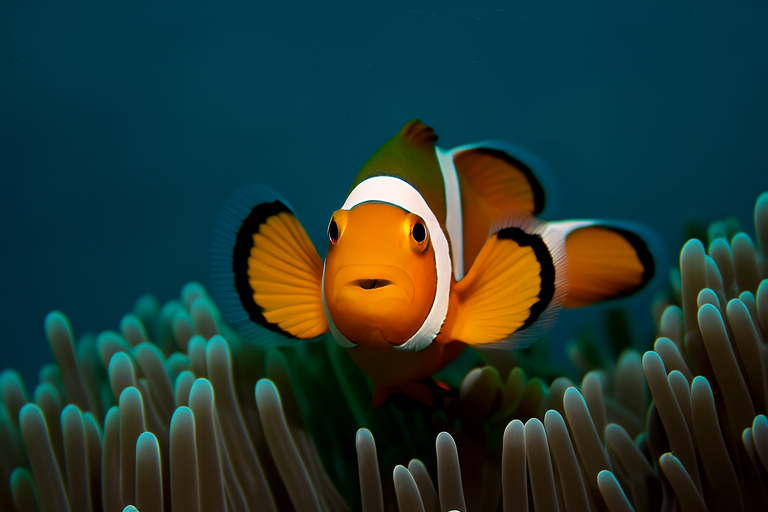
The idea that all clownfish are orange is another popular misconception. While the iconic orange-and-white striped clownfish, specifically the Amphiprion percula, is the most recognizable, there are actually 30 different species of clownfish, each with its own unique coloration and pattern.
Studies conducted by marine biologists have revealed that clownfish can exhibit a wide range of colors, including red, yellow, and even black. These variations in coloration are influenced by factors such as genetics, environmental conditions, and geographic location. For instance, clownfish living in deeper waters tend to be darker in color, while those in shallower waters are usually brighter. This diversity in coloration highlights the adaptability of clownfish to different habitats.
Additional Myths About Clownfish
Beyond the three main myths discussed above, there are several other misconceptions about clownfish. One such myth is that clownfish are immune to the stings of sea anemones. While it is true that clownfish have developed a resistance to the nematocysts (stinging cells) of their host anemones, they are not entirely immune. They have a thick mucus layer on their skin that provides protection, but they can still be affected if they venture too far from the anemone or if the anemone is irritated.
Another myth is that all clownfish are born female. This is incorrect; clownfish, like many other fish species, are born as males. Only a select few individuals within the group develop into females, typically the largest one in the breeding pair.
The Importance of Accurate Information
The accurate portrayal of clownfish is essential for marine conservation and responsible aquarium practices. Misinformation can lead to misunderstandings about the needs and behaviors of these fish, potentially resulting in poor care in captivity and contributing to the decline of wild populations.
For marine conservation, understanding the true nature of clownfish helps in creating effective protection strategies. It underscores the importance of preserving diverse ecosystems where clownfish can thrive, ensuring the survival of both the species and their anemone hosts.
When it comes to aquarium practices, accurate information is vital for providing the best possible care for clownfish. Knowing that they can coexist with various anemone species and understanding their social structure can help aquarists create enriching environments that mimic natural conditions. Additionally, recognizing the importance of maintaining a balanced diet and providing adequate space can contribute to the health and longevity of these fish in captivity.
Encouraging readers to learn more about these fascinating creatures can foster a greater appreciation for marine life. By dispelling myths and promoting accurate knowledge, we can ensure that future generations continue to marvel at the wonders of the ocean and work towards its preservation.
Conclusion
Clownfish are truly remarkable creatures, and their popularity has made them a favorite among marine enthusiasts. However, the portrayal of clownfish in media has sometimes led to misconceptions about their behavior, biology, and habitat. By debunking these myths, we can gain a better understanding of the true nature of clownfish and appreciate the complexity of their relationships with their environment.
The importance of accurate information cannot be overstated. It is crucial for marine conservation efforts and responsible aquarium practices. Let us continue to explore and learn about these fascinating creatures, ensuring their survival and well-being for generations to come.
