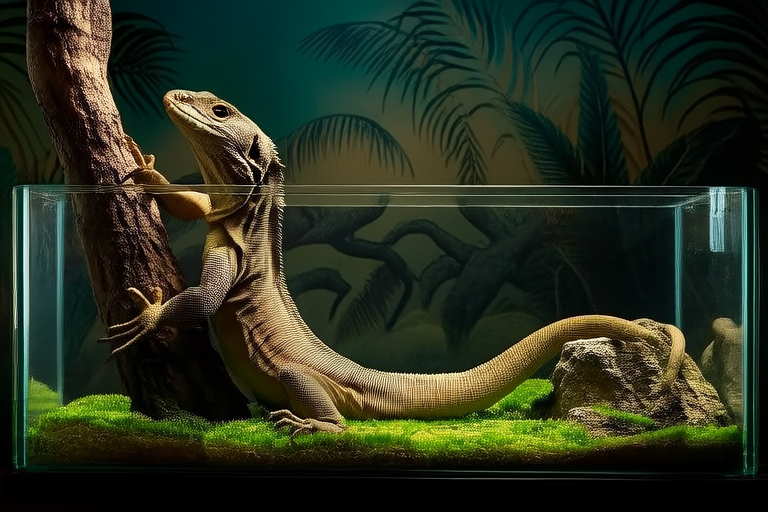
The Ultimate Guide to Housing and Feeding Your Water Monitor
Water monitors (Varanus salvator) are large, semi-aquatic lizards native to Southeast Asia. They require specific care to thrive in captivity. This guide covers everything from housing and feeding to health maintenance and enrichment activities.
Suitable Enclosure Size and Setup
Water monitors need spacious enclosures to accommodate their active nature and swimming habits. Juveniles can start in a 4x2x2 feet tank, but adults require at least a 6x3x3 feet or larger. Ensure the enclosure has a secure lid to prevent escapes. For juveniles, a glass aquarium with a mesh top works well; for adults, a custom-built wooden vivarium or a large outdoor enclosure may be necessary.
Temperature and Humidity Requirements
Water monitors are ectothermic, relying on external heat sources to regulate body temperature. Maintain a basking spot of 95-100°F (35-38°C) and a cool side between 75-85°F (24-29°C). Use thermometers and thermostats to monitor and control temperatures. A daytime high of 85-90°F (29-32°C) and nighttime drop of 75-80°F (24-27°C) are ideal.
Humidity levels should be kept between 70-80%. Achieve this by misting daily, using a humidifier, or placing a large water dish in the enclosure. Ensure adequate ventilation to prevent stagnant air.
Substrate Options
Select substrates that retain moisture and promote healthy digestion. Cypress mulch, orchid bark, and coconut fiber are excellent choices. Avoid sand and gravel, as they can cause impaction. Spot clean the substrate daily and perform full substrate changes every few months.
Lighting Needs
UVB lighting is crucial for calcium metabolism and overall health. Use a 10% UVB bulb placed within 12-18 inches of the basking area. Provide 10-12 hours of light daily. Full-spectrum fluorescent bulbs are recommended. Replace bulbs every six months or according to manufacturer instructions.
Water Area Specifications
Water monitors spend significant time in water, so provide a large, shallow water dish. The depth should allow the lizard to submerge its entire body comfortably. Refresh the water daily and ensure it remains clean. Chlorine-free water is essential. A filtration system can help maintain water quality.
Dietary Recommendations
Water monitors are carnivorous, requiring a diet rich in protein. Feed them a variety of prey items such as mice, rats, insects, fish, and occasional feeder lizards. Gut-load insects with nutritious food before offering them to your monitor.
Feeding Schedules
Feed juveniles daily, reducing to every other day as they mature. Adults can be fed twice weekly. Offer appropriately sized prey; overfeeding can lead to obesity. Monitor their weight and adjust feeding frequency accordingly.
Enrichment Activities
To stimulate mental and physical activity, provide climbing structures like branches, logs, and rocks. Incorporate hiding spots and tunnels. Rotate toys and objects periodically to keep the environment interesting. Encourage natural behaviors by creating a diverse and stimulating habitat.
