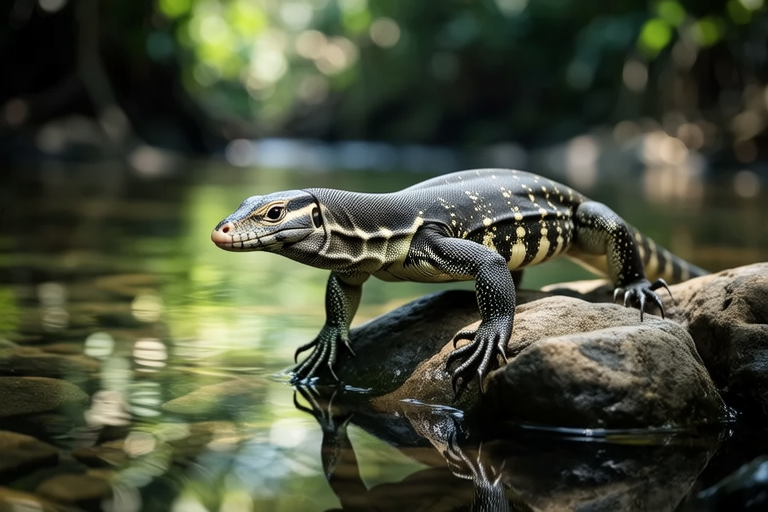
Stealthy Survival Tactics of Water Monitors
The water monitor (Varanus salvator) is one of the most remarkable reptiles found in tropical regions around the world. These lizards are known for their impressive size, ranging from 1.2 to 3 meters in length, and their incredible adaptability. They thrive in both aquatic and terrestrial environments, making them formidable hunters and survivors. Their stealthy survival tactics are a result of a combination of physical adaptations, hunting strategies, and behavior that allows them to navigate their complex habitats with ease.
Physical Adaptations for Stealth
Water monitors possess several physical features that enhance their ability to move stealthily through their environment. Their streamlined bodies are covered in rough, scaly skin, which provides excellent protection against scratches and abrasions. The scales also help reduce drag when swimming, allowing the lizard to glide effortlessly through water. This adaptation is crucial for their aquatic lifestyle, where speed and agility can mean the difference between life and death.
One of the most striking features of water monitors is their powerful limbs. Their long, muscular legs enable them to run swiftly across land and swim gracefully in water. Their claws are sharp and curved, providing traction on various surfaces and aiding in climbing trees and rocks. Additionally, these claws are useful for digging burrows and extracting prey from crevices. The water monitor’s tail is another remarkable feature, serving as a counterbalance during quick turns and a propeller-like appendage for swimming.
The water monitor’s eyes are highly adapted for detecting movement, even in low-light conditions. They have excellent binocular vision, which helps them judge distances accurately and spot potential threats or prey. Their nostrils are located high on their snouts, allowing them to breathe while partially submerged. This adaptation enables them to remain hidden underwater for extended periods, increasing their chances of surprising unsuspecting prey.
Hunting Strategies
Water monitors are opportunistic feeders, meaning they eat whatever food is available in their environment. Their diet consists mainly of fish, amphibians, insects, small mammals, birds, and eggs. However, they will also consume carrion and even other reptiles. Their hunting strategies vary depending on the type of prey and the environment.
When hunting in water, water monitors rely on their keen sense of smell to locate prey. They can detect chemical signals released by potential meals, even from great distances. Once they have zeroed in on a target, they use their powerful jaws and sharp teeth to seize and immobilize their catch. Their strong neck muscles allow them to deliver powerful bites, crushing the bones of larger prey or tearing flesh from smaller animals.
In contrast, when hunting on land, water monitors employ a more patient approach. They often lie in wait near termite mounds or bird nests, waiting for an opportunity to strike. Their ability to blend into their surroundings makes them nearly invisible to potential prey. When the moment is right, they pounce with lightning-fast speed, catching their victims off guard. In addition to their physical prowess, water monitors have been observed using tools to access hard-to-reach food sources. For example, they have been seen using sticks to probe holes in trees in search of insects.
Camouflage Techniques
Water monitors are masters of disguise, thanks to their coloration and behavior. Their scales come in a variety of hues, including shades of brown, green, and black, which help them blend into their surroundings. Depending on the region, their coloration may change to match the local vegetation, making it difficult for predators and prey alike to spot them.
Aside from their natural camouflage, water monitors also employ behavioral techniques to remain hidden. They often flatten themselves against tree trunks or rocks, pressing their bodies close to the surface to minimize their profile. When moving through dense foliage, they adopt a slow, deliberate gait, pausing frequently to scan their surroundings for any signs of danger. This cautious approach allows them to conserve energy while reducing the risk of detection.
Water monitors are also adept at using their environment to their advantage. They frequently seek refuge in dense vegetation or among rocks and fallen logs, where they can hide from predators or ambush prey. Their ability to climb trees and swim between islands in rivers and lakes further enhances their capacity to evade danger and find new opportunities for feeding.
Navigating Aquatic and Terrestrial Environments
Water monitors are equally comfortable in both aquatic and terrestrial environments, a trait that sets them apart from many other reptiles. Their ability to move seamlessly between these two worlds is crucial for their survival and success as predators. In the water, they use their powerful tails to propel themselves forward, achieving speeds of up to 30 kilometers per hour. Their streamlined bodies reduce drag, allowing them to maneuver quickly and efficiently in pursuit of prey.
On land, water monitors employ a combination of running and walking gaits, depending on the terrain and the urgency of the situation. They can reach speeds of up to 18 kilometers per hour when necessary, making them one of the fastest lizards in the world. Their ability to move swiftly across both water and land gives them a significant advantage over many of their potential predators.
Water monitors are also skilled climbers, using their strong limbs and sharp claws to scale trees and rocks. This ability allows them to access food sources that would otherwise be out of reach. They can even swim between islands in rivers and lakes, expanding their territory and increasing their chances of finding food and avoiding danger.
Avoiding Predators
Despite their impressive size and strength, water monitors still face numerous threats from predators. To avoid becoming someone else’s meal, they rely on a combination of physical adaptations, behavior, and environmental knowledge. One of their primary defense mechanisms is their ability to flee at high speeds, either on land or in water. Their powerful limbs and streamlined bodies allow them to escape quickly when danger approaches.
Water monitors also use their coloration and behavior to remain hidden from predators. They often flatten themselves against tree trunks or rocks, pressing their bodies close to the surface to minimize their profile. When moving through dense foliage, they adopt a slow, deliberate gait, pausing frequently to scan their surroundings for any signs of danger. This cautious approach allows them to conserve energy while reducing the risk of detection.
Water monitors are also known to release a foul-smelling secretion from glands near their cloaca when threatened. This noxious odor can deter predators and give the lizard time to escape. In some cases, water monitors may even play dead to confuse or discourage potential attackers.
Diet and Feeding Behavior
Water monitors are opportunistic feeders, meaning they eat whatever food is available in their environment. Their diet consists mainly of fish, amphibians, insects, small mammals, birds, and eggs. However, they will also consume carrion and even other reptiles. Their ability to eat a wide range of foods allows them to survive in diverse ecosystems and adapt to changing environmental conditions.
Water monitors are primarily active during the day, spending much of their time searching for food. They use their keen sense of smell to locate prey, even from great distances. Once they have zeroed in on a target, they use their powerful jaws and sharp teeth to seize and immobilize their catch. Their strong neck muscles allow them to deliver powerful bites, crushing the bones of larger prey or tearing flesh from smaller animals.
In addition to their physical abilities, water monitors have been observed using tools to access hard-to-reach food sources. For example, they have been seen using sticks to probe holes in trees in search of insects. This behavior demonstrates their intelligence and problem-solving skills, which are essential for survival in the wild.
Sensory Capabilities
Water monitors possess an array of sensory capabilities that enhance their ability to survive in their environment. Their eyes are highly adapted for detecting movement, even in low-light conditions. They have excellent binocular vision, which helps them judge distances accurately and spot potential threats or prey. Their nostrils are located high on their snouts, allowing them to breathe while partially submerged. This adaptation enables them to remain hidden underwater for extended periods, increasing their chances of surprising unsuspecting prey.
Water monitors also have an acute sense of smell, which they use to locate prey and avoid danger. They can detect chemical signals released by potential meals, even from great distances. This ability is particularly useful in aquatic environments, where visibility may be limited. Additionally, water monitors have been shown to respond to vibrations in the water, allowing them to detect the movements of nearby prey or predators.
Movement Patterns
Water monitors exhibit distinct movement patterns depending on the situation. When swimming, they use a powerful side-to-side motion of their tail to propel themselves forward, achieving speeds of up to 30 kilometers per hour. On land, they employ a combination of running and walking gaits, depending on the terrain and the urgency of the situation. They can reach speeds of up to 18 kilometers per hour when necessary, making them one of the fastest lizards in the world.
Water monitors are also skilled climbers, using their strong limbs and sharp claws to scale trees and rocks. This ability allows them to access food sources that would otherwise be out of reach. They can even swim between islands in rivers and lakes, expanding their territory and increasing their chances of finding food and avoiding danger.
Conclusion
The water monitor is a truly remarkable creature, with a combination of physical adaptations, hunting strategies, and behavior that allows it to thrive in its complex environment. Its ability to navigate both aquatic and terrestrial habitats, coupled with its keen senses and stealthy movements, makes it a formidable predator and survivor. By understanding the unique features that contribute to its success, we gain valuable insights into the intricate web of life that exists in tropical regions around the world.
