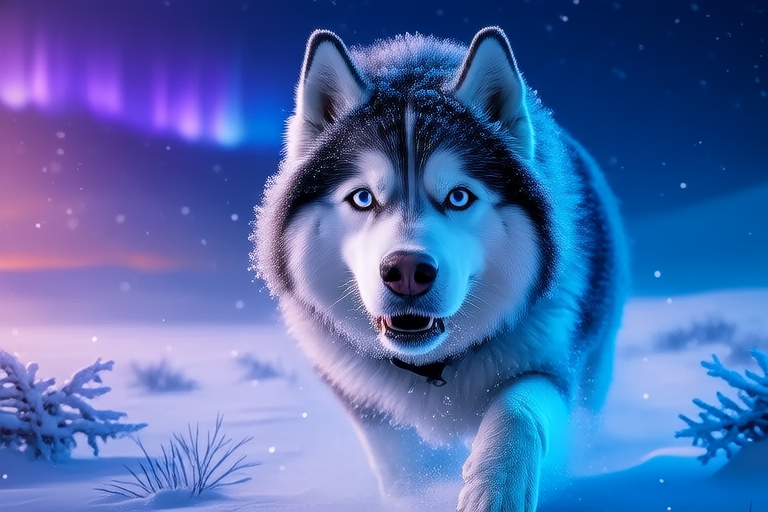
Winter Warriors: How Siberian Huskies Conquer Extreme Cold
The harsh landscapes of Siberia have long been home to the resilient and hardy Siberian Husky. These dogs have a rich history deeply intertwined with the lives of the Chukchi people, who first bred them for their exceptional sledding abilities. The Siberian Husky’s origins lie in the frigid tundra regions of northeastern Asia, where they were initially used to pull sleds across vast, snowy expanses. Their enduring strength and stamina made them indispensable to the Chukchi, who relied on these dogs to transport goods and people over long distances in some of the harshest conditions imaginable.
A Legacy of Sledding
The Chukchi people, indigenous to Siberia, developed the Siberian Husky to be a versatile working dog capable of handling the demanding tasks required in their environment. The dogs were not only valued for their ability to traverse icy terrains but also for their capacity to endure prolonged periods of exertion without significant wear and tear. This endurance is exemplified by the famous “Serbian Husky” race, which began in Alaska during the early 20th century. The race was born out of necessity when a diphtheria outbreak threatened the population of Nome, Alaska. A relay of mushers, including many Siberian Huskies, delivered life-saving serum over hundreds of miles of frozen wilderness, saving countless lives. This event solidified the breed’s reputation as reliable and indomitable winter warriors.
Physical Adaptations for Cold
Siberian Huskies possess a range of remarkable physical adaptations that allow them to thrive in extreme cold. Their double-layered coat is one of their most defining features. The outer layer consists of straight, coarse fur designed to repel water and snow, while the inner layer is soft and dense, providing excellent insulation against the biting cold. Additionally, their thick undercoat grows thicker in the colder months, ensuring maximum warmth. This unique coat structure not only protects them from the elements but also allows them to shed excess heat efficiently, preventing overheating during intense physical activity.
Another key adaptation is their webbed feet, which provide enhanced traction on icy and snowy surfaces. These webbed paws help the dogs maintain balance and grip on slippery terrains, reducing the risk of slipping or sliding. The paw pads are also well-adapted, featuring tough, protective skin that can withstand the cold without freezing. This is crucial for maintaining mobility and agility in challenging winter conditions.
Beyond their coat and paws, Siberian Huskies have evolved efficient mechanisms for regulating their body temperature. Their circulatory system includes a network of blood vessels that work to conserve heat. By constricting peripheral blood flow, they reduce the amount of heat lost through their extremities, allowing them to maintain core body temperatures even in sub-zero conditions. This physiological adaptation ensures that they can perform at peak efficiency without succumbing to the dangers of hypothermia.
Behavioral Traits for Survival
In addition to their physical adaptations, Siberian Huskies exhibit behavioral traits that contribute significantly to their success in cold environments. One of their most notable characteristics is their strong pack mentality. These dogs are inherently social animals that thrive in group settings, where they can rely on each other for support and companionship. This pack mentality fosters cooperation and teamwork, making them ideal candidates for sledding and other collaborative activities. They work together seamlessly, sharing responsibilities and ensuring that no individual dog becomes overexerted.
High energy levels are another hallmark of the Siberian Husky. Despite the harshness of their environment, these dogs maintain an almost boundless supply of energy, enabling them to perform long-distance sledding trips without fatigue. Their relentless enthusiasm is driven by a combination of genetic predisposition and environmental conditioning. This energy translates into a natural resilience that allows them to push through challenging situations and overcome obstacles that would deter less robust breeds.
Scientific Insights
Recent scientific studies have provided valuable insights into how Siberian Huskies manage to thrive in extreme cold. Researchers have examined the biochemical processes that enable these dogs to maintain optimal body temperatures during prolonged exposure to low temperatures. One key finding is the role of brown adipose tissue (BAT), commonly known as “brown fat,” which is particularly abundant in Siberian Huskies. Brown fat is metabolically active and generates heat when activated, helping the dogs to maintain a stable internal temperature. This mechanism is especially vital during rest periods, when physical activity is minimal.
Moreover, the dogs’ respiratory systems have adapted to prevent excessive heat loss. Unlike humans, Siberian Huskies do not pant excessively in cold weather, which helps them retain more body heat. Instead, they employ a more controlled breathing pattern that minimizes the loss of warm air. This adaptation is crucial for conserving energy and preventing hypothermia during extended periods of cold exposure.
Notable Examples of Endurance
Stories abound of Siberian Huskies displaying remarkable endurance and resilience in winter conditions. One such story is that of Balto, a Siberian Husky who led the final leg of the serum run to Nome in 1925. Balto and his team covered the last 53 miles in blizzard conditions, arriving just in time to deliver the critical medicine. Another notable example is Togo, who completed the longest and most dangerous part of the journey, covering nearly 200 miles in brutal conditions. These dogs demonstrated not only physical prowess but also an unwavering determination to complete their mission.
In modern times, Siberian Huskies continue to excel in winter sports and endurance events. They participate in various dog sledding races around the world, consistently proving their mettle in extreme cold. Their legacy as winter warriors is further cemented by their participation in Arctic expeditions, where they serve as loyal companions and invaluable workers.
Conclusion: True Winter Warriors
From their origins in Siberia to their roles in modern-day winter sports and expeditions, Siberian Huskies have proven themselves to be true winter warriors. Their combination of physical adaptations, behavioral traits, and physiological capabilities enables them to conquer the challenges posed by extreme cold. Whether it’s their thick, insulating coats, webbed feet, efficient body temperature regulation, or their unyielding pack mentality, every aspect of their being has been honed to thrive in the coldest environments. Their legacy as dependable and resilient dogs continues to inspire admiration and respect, making them a symbol of endurance and perseverance in the face of nature’s harshest conditions.
