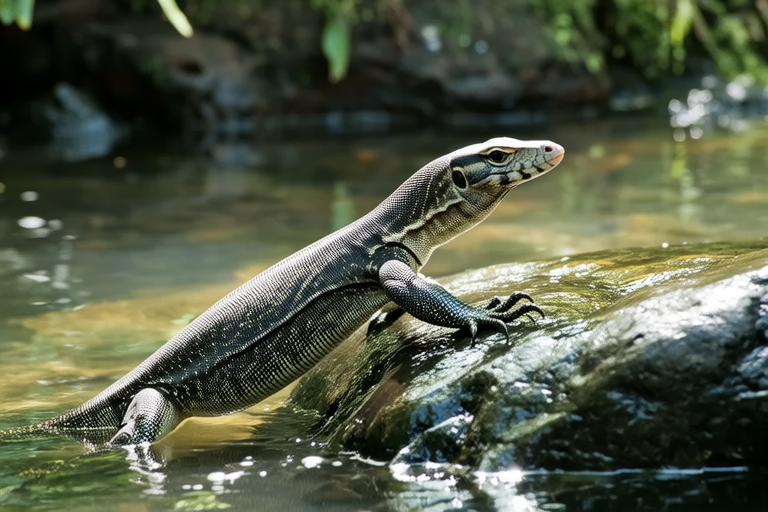
Aquatic Agility Unlocked: The Intriguing World of the Water Monitor
The water monitor (Varanus salvator) is one of the most impressive reptiles in the world, renowned for its remarkable adaptability and agility in both terrestrial and aquatic environments. This species, native to Southeast Asia, has evolved a suite of unique physiological and behavioral adaptations that allow it to thrive in diverse habitats ranging from dense jungles to expansive wetlands. In this article, we will explore the fascinating world of the water monitor, delving into its physical attributes, ecological role, behavior, and the challenges it faces in the modern world.
Physical Characteristics and Adaptations
The water monitor is a large lizard, typically reaching lengths of up to 3 meters (9.8 feet) and weighing as much as 30 kilograms (66 pounds). Its robust build and powerful limbs are testament to its strength and endurance. The water monitor’s skin is covered in scales that provide protection against predators and help streamline its body for efficient swimming. The coloration of these lizards varies widely, often featuring shades of brown or green, which helps them blend into their surroundings.
The water monitor possesses several anatomical features that enhance its swimming capabilities. It has long, muscular tail that acts as a powerful rudder, aiding in steering and propulsion through water. Additionally, its nostrils are positioned high on its snout, allowing it to breathe while partially submerged. The lizard’s webbed feet also contribute significantly to its aquatic prowess, enabling it to paddle efficiently and maintain balance in turbulent waters.
Habitat Preferences and Navigation Skills
Water monitors are highly adaptable and can be found in a variety of habitats, including mangrove swamps, rivers, lakes, and coastal areas. They prefer environments rich in vegetation, which provides both cover and nesting sites. These lizards are equally at home on land as they are in water, and their ability to traverse between the two realms is crucial to their survival.
In the water, the monitor uses its keen eyesight and sense of smell to locate prey and navigate complex underwater structures. On land, it moves with grace and speed, using its strong legs to run swiftly and its sharp claws to climb trees and rocks. The water monitor’s ability to bridge between these environments allows it to exploit a wide range of food sources and avoid potential dangers.
Diet and Hunting Techniques
The water monitor is an opportunistic feeder, with a diet that includes fish, frogs, birds, small mammals, insects, and even carrion. Its hunting techniques are as varied as its diet, and it employs stealth, speed, and strength to capture prey. Monitors often lie in wait near water bodies, ready to ambush passing creatures. They are also known to actively pursue prey on land, using their speed and agility to overtake smaller animals.
Despite their formidable appearance, water monitors are not immune to predation. Large snakes, crocodiles, and birds of prey pose significant threats, especially to juveniles. To mitigate these risks, water monitors rely on their camouflage and quick reflexes to escape danger. Their ability to retreat into water also serves as an effective defense mechanism.
Social Behaviors and Reproduction
While water monitors are generally solitary creatures, they do exhibit some social behaviors, particularly during the breeding season. Males engage in territorial disputes, often wrestling with rivals to secure mates. Females lay clutches of up to 40 eggs, usually in termite mounds or burrows, where the eggs benefit from the constant temperature and humidity provided by these structures. Once hatched, the young monitors are independent from birth and must fend for themselves.
Conservation Status and Threats
Despite their widespread distribution, water monitors face numerous threats to their survival. Habitat destruction, driven by deforestation and urbanization, has reduced the availability of suitable nesting sites and food sources. Overexploitation for the exotic pet trade and traditional medicine markets further exacerbates the pressure on wild populations. Climate change poses another significant challenge, altering weather patterns and sea levels, which could impact the lizards’ ability to find shelter and food.
Conservation Efforts
To address these threats, various conservation initiatives have been implemented. Protected areas have been established to safeguard critical habitats, and regulations have been put in place to control the trade of water monitors. Education campaigns aim to raise awareness about the importance of preserving these magnificent creatures and their ecosystems. Additionally, research projects are underway to better understand the biology and behavior of water monitors, providing valuable insights for future conservation strategies.
In conclusion, the water monitor is a testament to nature’s ingenuity, showcasing an extraordinary combination of physical adaptations and behavioral flexibility. By understanding and protecting this species, we can ensure the continued existence of these remarkable reptiles and the vital roles they play in their ecosystems. As stewards of the Earth, it is our responsibility to safeguard the water monitor and other wildlife, ensuring that future generations can marvel at their aquatic agility and tenacity.
