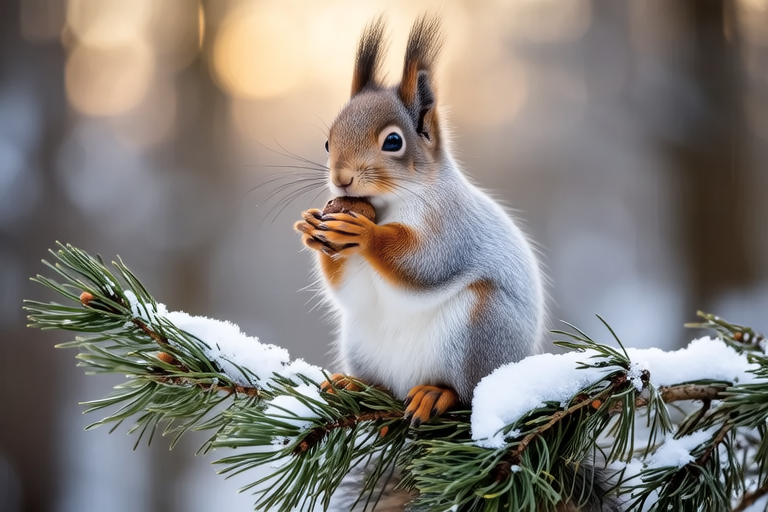
The Surprising Survival Tactics of Squirrels in Winter
As winter’s icy grip tightens over much of the Northern Hemisphere, many animals retreat into hibernation or migrate to warmer climes. But not the squirrel. These small, agile creatures remain active throughout the cold season, employing a range of surprising survival tactics that have long intrigued naturalists and scientists alike.
The Frozen Forest: A Squirrel’s Winter World
Winter transforms the forest into a stark, silent world. Trees stand bare, their branches creaking under heavy snow, while the ground is often buried beneath a thick layer of white. The air is crisp and biting, and food sources that were abundant in summer and autumn become scarce. Yet, amidst this harsh landscape, squirrels thrive, adapting their behavior and physiology to survive.
Caching: The Secret to Winter Survival
One of the most remarkable survival strategies employed by squirrels is caching—storing food for later use. In the fall, when nuts, seeds, and acorns are plentiful, squirrels busily collect and bury their harvest across the forest floor. Each cache may contain just one nut or several, depending on the species and the size of the animal. For example, Eastern Gray Squirrels (Sciurus carolinensis) might create hundreds of caches, each hidden in a different location.
This behavior is not just a matter of convenience; it’s a complex strategy that ensures food availability during lean times. Research has shown that squirrels use a combination of spatial memory and olfactory cues to relocate their caches, even months after they’ve been buried. This ability to remember cache locations is crucial, especially since some caches can be forgotten or stolen by other animals.
Behavioral Adaptations
While caching provides a buffer against food scarcity, squirrels also adapt their behavior to cope with the challenges of winter. They become more cautious, spending less time above ground and more time in their nests. Their nests, known as dreys, are usually located high up in trees, providing insulation and protection from predators.
Squirrels also adjust their daily routines. Instead of being diurnal, they may become crepuscular, meaning they are most active during dawn and dusk. This shift helps them avoid the coldest parts of the day and reduces their energy expenditure. Additionally, they may travel shorter distances between feeding sites, minimizing exposure to the elements.
Physiological Changes
Beyond behavioral adjustments, squirrels undergo physiological changes to endure winter. Their metabolism slows down, allowing them to conserve energy. Their body temperature also drops slightly, reducing heat loss. This process, known as torpor, is not full hibernation but a milder form of energy conservation that many small mammals use.
Another fascinating adaptation is the thickening of their fur. As temperatures drop, squirrels grow a second coat of fur that insulates them against the cold. This new layer is denser and thicker than their summer coat, helping to retain body heat. Some species, like the Red Squirrel (Sciurus vulgaris), also change the color of their fur, becoming paler to blend in with the snow-covered landscape.
Interactions with Other Species
Life in the winter forest is not just about survival for squirrels; it’s also about competition and cooperation. Squirrels compete fiercely with each other for limited resources, sometimes stealing food from each other’s caches. This behavior, known as kleptoparasitism, can lead to complex interactions within squirrel populations.
At the same time, squirrels must navigate the presence of predators, including birds of prey and larger mammals. Their agility and quick reflexes are essential for evading danger. Interestingly, some studies suggest that squirrels may even engage in deceptive caching, creating empty caches to mislead potential thieves.
The Broader Implications
Understanding how squirrels survive winter provides valuable insights into broader ecological processes. Their caching behavior, for instance, plays a critical role in seed dispersal, contributing to the regeneration of forests. By burying seeds and sometimes forgetting them, squirrels inadvertently plant the next generation of trees.
In a changing climate, where winters may become colder and more unpredictable, these survival tactics could prove vital. Squirrels that can adapt their caching patterns and behavioral routines to new conditions may have a better chance of survival. Scientists are increasingly studying how climate change affects wildlife, and squirrels, with their intricate survival strategies, offer a window into the future of wildlife adaptation.
Moreover, the study of squirrel behavior and physiology can inform conservation efforts. By understanding what factors contribute to successful winter survival, we can better protect habitats and ensure the continued health of squirrel populations. This knowledge can also extend to other species, offering a model for how animals might adapt to changing environmental conditions.
Conclusion
From caching food to adapting their behavior and physiology, squirrels demonstrate remarkable resilience in the face of winter’s challenges. Their survival strategies are a testament to the ingenuity of nature and the adaptability of wildlife. As we continue to explore these tactics, we gain not only a deeper appreciation for the creatures that share our world but also valuable lessons about survival in a changing climate.
So, the next time you see a squirrel darting through the snow, take a moment to appreciate the complex web of behaviors and adaptations that allow it to thrive in the heart of winter. These tiny, determined animals are not just surviving—they are thriving, and their story is one of perseverance and adaptation in the face of adversity.
