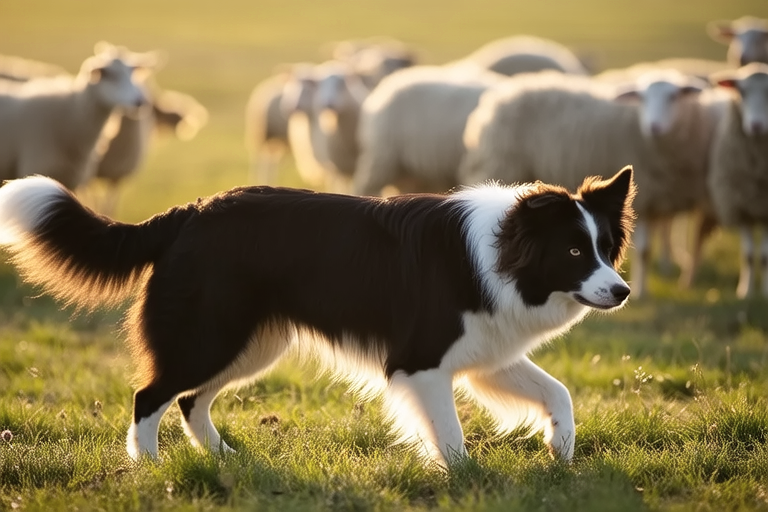
The Truth About Border Collies: Not Just Smart, But Totally Addicted to Work
They’re the breed that can solve puzzles in seconds, learn commands after a single demonstration, and seem to anticipate your thoughts before you even speak them. Border Collies aren’t just smart—they’re legendary. But there’s a deeper truth beneath their dazzling intellect: these dogs aren’t merely intelligent; they are addicted to work. Their drive isn’t a quirk—it’s wired into their DNA.
Ask any working dog trainer or seasoned owner, and they’ll tell you: a Border Collie without purpose is like a high-performance engine idling in neutral. It might look calm on the surface, but beneath lies a restless energy, an unmet need for mental and physical engagement. This isn’t about being hyperactive—it’s about survival. For the Border Collie, work isn’t optional. It’s essential.
The Genetic Blueprint of Drive
What makes Border Collies so different? Science points to a unique genetic makeup. Research published in journals like Frontiers in Genetics has identified specific gene variants linked to increased trainability, problem-solving ability, and sustained focus—traits highly valued in herding breeds. One key gene, CDK5RAP2, appears to influence attention span and behavioral flexibility, traits that give Border Collies their reputation as “the Einstein of dogs.”
But it’s not just genetics. The breed’s history is steeped in labor. Developed in the rugged hills of northern England and southern Scotland, Border Collies were bred for one purpose: to control sheep with precision and endurance. A single misstep could mean lost livestock, so only the most attentive, responsive, and tireless dogs survived the selection process. Over generations, this created a breed whose entire identity is tied to purposeful activity.
Dr. Sarah Thompson, a certified canine behaviorist based in Edinburgh, explains: “You can’t separate intelligence from instinct in a Border Collie. Their brain is built for work. When we see them learning quickly, it’s not just cleverness—it’s evolutionary adaptation. They don’t just want to learn; they need to.”
“I’ve had Border Collies that would sit quietly for hours, looking at me like I’d forgotten something important. Then I’d hand them a toy, and suddenly they’re off—darting around, tossing it back, retrieving it again. It’s like they’re saying, ‘This is what I’m meant to do.’”
—Lena Hartwell, professional agility trainer and owner of three Border Collies
Real Lives, Real Drives: Stories from the Field
Consider the story of Jasper, a 4-year-old Border Collie owned by Emma Reyes, a schoolteacher in Portland, Oregon. Jasper was a model pet—well-behaved, affectionate, and gentle with children. But after a few months of routine walks and occasional fetch games, Emma noticed something troubling: Jasper started chewing furniture, barking at shadows, and even attempting to herd her cat. “It wasn’t aggression,” she says. “It was frustration. He wasn’t bored—he was desperate for direction.”
Emma enrolled Jasper in an agility class. Within weeks, the transformation was astonishing. His eyes lit up during training. He didn’t just follow cues—he anticipated them. “He’d get excited just seeing the equipment set up,” she recalls. “It was like he’d finally found his tribe.” Today, Jasper competes in regional trials and serves as a therapy dog at a local library. “He’s happier than I’ve ever seen him,” Emma says. “And so am I.”
Then there’s Ben, a retired firefighter from Yorkshire who adopted a Border Collie named Daisy from a rescue group. Initially, he thought she’d be a quiet companion. But within days, Daisy began “herding” his garden tools, organizing books by size, and even trying to direct traffic when he walked down the street. “She wasn’t being stubborn,” Ben admits. “She was trying to make sense of the world—and she needed to be useful.” After joining a local herding trial club, Daisy flourished. Now, she works with a small flock of sheep every weekend. “She’s not just a dog,” Ben says. “She’s a partner.”
Challenges in the Modern Home
For many families, the idea of a Border Collie seems intimidating. “Won’t they be too intense?” “Can we handle that much energy?” These concerns are valid—but often stem from misconceptions. Yes, they have immense stamina and mental hunger. But with the right outlets, they become some of the most loyal, affectionate, and rewarding companions you’ll ever know.
The real danger comes when their needs go unmet. Without purpose, Border Collies may develop behavioral issues such as separation anxiety, destructive chewing, excessive barking, or even depression. Unlike other breeds that can adapt to a more relaxed lifestyle, Border Collies suffer when denied meaningful activity. As Dr. Marcus Lin, a veterinary behavior specialist in Seattle, warns: “Ignoring a Border Collie’s instinctual drive isn’t just unfair—it’s harmful. You’re asking a creature designed for constant mental engagement to live like a couch potato. That’s like asking a sprinter to spend all day sitting still.”
So how do you meet their needs in a non-working household?
Fulfilling the Instinct: Practical Outlets for Everyday Life
Here’s the good news: you don’t need a farm or a large yard to keep a Border Collie fulfilled. What matters is consistency, creativity, and commitment to mental stimulation.
- Agility Training: This is one of the most popular and effective outlets. With tunnels, jumps, weave poles, and contact obstacles, agility provides both physical exertion and intense mental focus. Many clubs offer beginner classes, making it accessible even for first-time owners.
- Flyball: A fast-paced, team-based sport involving hurdles and a ball launcher. It’s perfect for dogs who love speed and teamwork. The excitement of the game triggers their natural prey drive and competitive spirit.
- Herding Trials (Even Small-Scale): You don’t need actual livestock. Some clubs offer “dummy sheep” or even use people or toys to simulate herding. It’s incredibly engaging and taps directly into their ancestral instincts.
- Puzzle Toys & Scent Games: Use treat-dispensing puzzles, snuffle mats, or scent trails to challenge their minds. Rotate toys weekly to maintain novelty. Think of it as “brain gym” for your dog.
- Advanced Obedience & Trick Training: Teach complex sequences like “fetch, retrieve, drop, return.” Incorporate commands with timing and precision. Border Collies thrive on structure and challenge.
“The key,” says Lena Hartwell, “is variety and consistency. Don’t just train once a week. Do 10 minutes of mental work every single day—even if it’s just a new command or a puzzle. It’s like keeping a muscle strong.”
Busting the Myths: Border Collies Aren’t Just for Professionals
One of the biggest myths is that Border Collies are only suitable for professionals—shepherds, trainers, or competitive athletes. While they excel in those roles, they can absolutely thrive as family pets. In fact, many successful pet owners report that their Border Collies are among the most well-adjusted dogs they’ve ever had—because their needs are met.
Another misconception is that they’re aggressive or difficult. In reality, aggression in Border Collies is almost always a symptom of frustration or lack of outlet. A well-exercised, mentally stimulated Border Collie is typically calm, focused, and deeply bonded to their family.
“I’ve had people say, ‘My neighbor’s Border Collie is so intense,’ but then I ask, ‘Does he have regular training?’” says Dr. Thompson. “More often than not, the answer is no. It’s not the dog—it’s the environment. Give them purpose, and they’ll surprise you with their gentleness and loyalty.”
The Bottom Line: Happiness Lies in Purpose
Border Collies aren’t just smart. They’re built to work. Their intelligence isn’t a bonus—it’s a function of their survival strategy. To deny them that function is to ignore a fundamental part of who they are.
But here’s the beautiful twist: when you provide that purpose, the rewards are extraordinary. You don’t just get a dog—you gain a partner. A confidant. A willing participant in life’s adventures. Whether it’s racing through an agility course, solving a tricky puzzle, or simply watching you with unwavering focus, the Border Collie gives everything they have—because they believe in the mission.
If you’re considering a Border Collie, don’t think about whether you can handle their energy. Ask instead: What kind of work can I build into our lives together? Because the answer isn’t just about training—it’s about connection.
“A Border Collie doesn’t just want to be loved. It wants to be useful. And when you let it be useful, it will love you back with everything it has.”
—Dr. Sarah Thompson, Canine Behaviorist
So yes, they’re smart. But more than that, they’re driven. They’re passionate. They’re addicted to purpose. And in a world where many dogs drift through life waiting for scraps of attention, the Border Collie stands out—not because it’s exceptional, but because it’s exactly as nature intended.
Give them work. Give them meaning. And watch as they transform from a bundle of nervous energy into a joyful, devoted companion—one who truly understands what it means to belong.
